9 Media Ecology (Taylor Swift – A Case Study) Week 3

Taylor the chameleon. The various star images of Swift. Eras Tour 101

Learning:

To explore how Taylor Swift’s Eras Tour, is an example of:

  1. The value and importance of live performances.
  2. The significance  and profitability of star images.
  3. Formulaic branding and production design designed for commercial success.
  4. A masterclass in how to involve fan communities into marketing and promotions.
  5. A participatory and highly invested fandom.

Media Concepts:

Audience, Representation, Industry, Language

The Big Debate:

Taylor Swift has become a mega star through clever branding, global distribution and fan power. She dominates the music industry and has enormous personal influence.

Key vocabulary:

Star image, branding, production design, fandom, participatory, formulaic, global distribution,

Media Theorists:

Hesmondhalgh, Jenkins and Curran and Seaton

Exam Question:

‘Given the dominance of global media, there are now few opportunities for local voices to be expressed.’ How far do you agree with this statement?


Swift & Eras

Taylor Swift is an iconic pop star. She has broken several records as a performer and recording artist. Whether you love or hate her music, there is no getting away from the fact that she has an enormous following of ‘Swifties’ and has made many billions of dollars from her recordings, concerts and tours.

The Eras tour by Taylor Swift has broken all records.

  • In August 2023, Spotify said Swift broke another record, becoming the first female artist in the streaming platform’s history to reach 100 million monthly listeners.
  • Her Eras Tour grossed more that $2 billion. That’s $2,000,000,000.00!
  • Swift will release her next re-recorded album 1989 (Taylor’s Version).
    • She is re-recording her earlier albums because it will allow her to own the songs’ original recordings (master tapes).
    • This was in part down to her fans ‘The Swifties,’ promoting ‘Taylor’s Version’ of the master tape in preference to the original master tape owned by her former label, Big Machine Records, (distributed by Universal – one of the Big 3). An excellent case study on ownership & control of music.
  • Taylor Swift’s Eras Tour concert film became a  blockbuster a week before hitting cinemas, a fantastic example of Cross Media Convergence.

A marketing magician.


The Melbourne Concert was a stand out concert

The audience wants to be interactive and are asking the question, ‘What’s in it for me?’ (Jenkins & Shirky)

They expect a degree of interaction and personal engagement for example Taylor Swift’s use of social media to drive excitement (buzz) for her Eras tour.

 It included the following crowd inspiring marketing techniques. 

  • a Swift-themed academic symposium
  • pop-up merchandise stand at Crown,
  • a projection on Flinders Street Station welcoming Swifties to town – with the clock striking 13, naturally.
  • A concert film was released in October, so most fans know exactly what to expect (and have learned all the dances and chants from TikTok).
  • Each fan received a wristband, which flashes in colours to match the era.
  • So much of the Eras Tour is fan service, from the inclusion of fan anthem Long Live (added later in the tour)

The Fans, aka Swifties

Swifties

The name legally became part of the Swiftian universe in 2017, when the singer/songwriter filed the name as a trademark. There are even, ‘Senior Swifties’.  Eventually, during her 1989 era, Swift broke down the final barrier between her and her fans. As a gift to some of her most longstanding followers, Swift created the “Secret Sessions,” in which she hosted groups of Swifties at her many houses around the globe.

The audience are not merely satisfied to be engaged in music and star images, they also seek to build the star into their personal identity (B&K & Gauntlet) furthermore the fans will work within communities of like minded people, Swifties (Jenkins). They were very powerful in her 2019 master tapes dispute with Big Machine. They have also been hugely instrumental in the success of her Eras tour, ref Swiftmania.

But the fandom has also been accused of inappropriate trolling of Taylor’s past partners.


Power beyond Music – politics are all part of the media circus.


So how could I use this in my exams?

Great case study for Music Industry: The Big 3 – production ownership, CMC, vertical integration, fandoms, participatory audiences, active audiences, Dyer, Curran and Seaton, Blumler and Katz, Jenkins, Shirky, viral marketing, star image, integrated advertising, word of mouth.

But also for Ecology – the way that an artist can become a global star, mass audiences, fandoms, social media, converged technology encouraging fan access and interaction, marketing, Shirky, Jenkins, Blumler & Katz, Dyer.

8 Media Ecology (Participation and Fandom) Week 3

The rise of the superfan communities. Hijab wearing nerds assemble!

Learning:

To understand how fandom has become the new force in the media ecology. How have the participatory audience been empowered by technological convergence and democratisation.

Media Concepts:

Audience, Representation, Industry, Language

The Big Debate:

Myths are important cultural ideas. These have been controlled and monetised by media conglomerates. Fans are reclaiming myths for themselves and starting to have power in the media ecology to shape the myths which are told and retold.

Key vocabulary:

Myth, fandom, participatory, copyright, textual poaching, influencers, converged technology and democratisation.

Media Theorists:

Two-step flow model, Gauntlett & Jenkins

Exam Question:

“‘Audiences now have just as much power as media institutions.’ To what extent do you agree with this statement?”


Questions:

  1. What is the sociological function of myth?
    • Myths = stories that societies hold dear because they say something important about the way society and individuals should behave.
  2. Who ‘owns’ the myths in modern Western societies? Here is a clue as to what Henry Jenkins thinks…
A modern myth?

Debate:

Do we think it is right for multinational media conglomerates to own the copyright to myths that, “Give clear structure to the community by reinforcing moral order and validating the community’s standards as true and correct?” Joseph Campbell.

Henry Jenkins thinks NO!!!

He suggests that fans groups are an important balance to institutional ownership and commodification of culturally important stories.

He also says that fan fiction is an attempt to redress the balance and bring the ownership of myths back to the people and society at large. Furthermore, through technological convergence and democratisation fans have been given the tools to produce and distribute their versions of these myths. He says…:

“Fan fiction is a way of the culture repairing the damage done in a system where contemporary myths are owned by corporations instead of owned by folk.”
― Henry Jenkins

Watch Henry Jenkins on the History and Impact of Fandom

Two Case Studies:

Case Study 1, Textual Poaching

This is how Henry Jenkins describes how fans borrow features of their beloved media texts and repurpose them to fulfil their own needs. Here is an example of wholesale textual poaching from fans who want to insert themselves into modern day myths, such as The Avengers. They also mock the narrative quite a bit, a critique?

Official Avengers (2012) trailer:

The Fan Version of the Trailer:

Case Study 2: The Harry Potter Alliance.

A group of fans bought together by their mutual love of The Harry Potter books to make real change in the real world.

The Harry Potter Alliance

Who describe themselves as: “An innovative cultural campaign that mobilized the huge Harry Potter fan-base to fight for justice, human rights, and democracy in our world, just like Harry did in his world.” 

“In the books, Harry starts a student activist group called Dumbledore’s Army that wakes the media and government to Voldemort’s return. I wanted to create a Dumbledore’s Army in our own world that could wake our media and governments to stop global warming and end genocide in Darfur.” See full article here.

Addendum

“On June 8, 2021, partly in response to Rowling’s remarks critical of transgender people, [31] the Harry Potter Alliance changed its name to Fandom Forward. The change also aimed to reflect its community better, because it also included fans of non-Harry Potter media.[32]

On December 5, 2024, Fandom Forward announced that the board and senior staff decided to close the organization.Wikipedia

Research Task

Find some more examples of fan groups who are poaching from existing texts and have a real impact in the real world. See the blog page on Jenkins for some ideas.

Alternatively, think of some crowd funded / sourced campaigns which are driven by their sense of injustice in the world to create content and share their ideas with the rest of the world…think…

Jenkins would suggest that’s this is an example of a participatory audience of fans, using their cognitive surplus and converged technology, to challenge the dominant hegemonic ideology!

Enter The ‘Toxic’ Manosphere!

Much of what Jenkins has to say about fan culture can just as equally be applied to influencers such as Andrew Tate.

Read an article about 19 year old Enys, a follower of Andrew Tate, who has become successful online and runs a subscription service on, ‘Home boxing.’

You can watch an documentary about Andrew Tate on Channel 4, you can also watch the documentary on YouTube.

Influencers, such Andrew Tate have been accused by some of promoting a regressive type of, ‘toxic masculinity.’

Is this a darker side of fandom?

7 Media Ecology (Post Truth and The News) Week 2

Where do you get your news? How trustworthy and balanced is your algorithmically chosen news?

Learning:

To consider how media ownership gives companies and individuals control and power over public discourse and media representations.

Media Concepts:

Audience, Representation & Industry

The Big Debate:

Should billionaires be able to buy up influential social media platforms or should governments be in control? What does this mean for freedom of expression?

Key vocabulary:

Ownership, town square, debate, democracy, market place of ideas, moderation, fact checkers, propaganda, control and power.

Media Theorists:

Curran and Seaton, Pariser, Milton and Mill

Exam Question:

“‛The media control how we understand and connect with the world.’ To what extent do you agree with this statement?”


Elon Musk defends Twitter as a platform for, ‘free speech.’

This is part of the interview between Elon and Don Lemon.

After this show, Elon Musk abruptly cancelled “The Don Lemon Show” on his social media network X after the former CNN anchor recorded this interview with the billionaire. 

Free speech?  It’s my platform – my rules! 

Factor in what the real agenda is behind social media (see podcast) and this is all quite disturbing about the ownership of the media.

Musk has suggested that X should be a modern day ‘digital town square’ where anyone and everyone has a right to speak.

Elon is adamant that he will remove anything illegal (such as child abuse etc) but if it’s not illegal, even though it might be hateful or harmful, then he won’t remove it!

What do you think?

Case Studies & News Stories About Media Ownership

These up to date news stories on ownership and citizen journalists are definitely worth a read and to be used as case studies for Ecology and Media Regulation.

A final though on Musk, free speech and X

When Elon Musk declares himself a defender of, “Free speech,” what should we make of that claim?

Does that mean simply opening up X (formerly Twitter) to a host of right wing conspiracy theorists to spread misinformation about,  the great replacement? Or flat earthers digging deeper in their delusional rabbit holes? Or opening up the digital town squares to the likes of Andrew Tate and his incel followers?

What would John Milton and the founding fathers make of this given that they wrote the First Amendment protecting freedom of religion, expression and peaceful representation to government?


MOLLY VS THE MACHINES – facebook and instagram try and defend the indefensible – it’s all about the money. 

The documentary has some excellent observations about power and ownership in the media.

Your teacher will show you some highlights that will evidence the deviousness of the tech giants and the oligarchs who are profiting from ‘us’.

6 Media Ecology (Post Truth News) Week 2

Don’t mistake the truth with facts. We all have our own ‘opinions on what is true,’ but facts are not a matter of opinion!

Learning:

To understand the ways in which social media algorithms have fragmented society.

How the role (& profitability) of the traditional news media is being eroded by the fake news & alternative facts.

Media Concepts:

Audience, Representation, Industry, Language

The Big Debate:

News is expensive. In a democracy, people need a shared basis in fact in which to make decisions. News is also a bit boring and mostly grim and depressing. It’s one of the, ‘informational vegetables,’ we should all make part of our media diet.

Key vocabulary:

Polarisation, tribal, them and us, division, fragmentation, algorithmic feed, audience ideology, fake news and alternative facts.

Media Theorists:

Pariser, Gauntlett, Jenkins, Shirky, Cultivation Effects Theory.

Exam Questions:

“‘Digital technology should make everyone’s access to media content equal; in fact, nothing could be further from the truth.’ To what extent do you agree with this statement?”


Pariser & Velshi

Watch the following videos and be prepared to define / discuss the terms which follow each of them:

Video One:

We are living in an echo chamber inside a filter bubble.

Considers how our social (media) experiences have been fragmented and fractured.

Be prepared to define the following terms or explain the idea…

  • Personalised Search Results
  • Filter Bubble
  • “Informational Vegetables and Informational Dessert”
  • Broadcast vs Narrowcast
  • Algorithmic Gatekeepers
  • Why should we consume media which are challenging or uncomfortable?
  • What did they dream the internet could be?
  • What is the, ‘Web of One?’

Class Discussion

So what does this mean for audiences & representations?

Video two:

How Fake News Grows in a Post-Fact World – Ali Velshi

A mainstream media journalist making a case for the mainstream traditional journalist. Ali Velshi explains what it means to exist in a post truth world.

Some ideas to discuss, some terms to define.
  • Reliable sources
  • Do you agree with his definition, ‘Fake news…sows confusion that obscures basic facts, thereby impeding necessary debate?’
  • Sponsored Content
  • Delegitimise journalism
  • Holding power to account
  • Alternative facts
  • ‘Fake news’ is crowding out ‘real news’ – very postmodern.
  • Algorithms decide on the news you see based on where you are online.
  • Clickbait, cookies and…algorithms.
  • You are more likely to repost salacious, sensational or negative news.

Class Discussion Topic

What does living in a post-fact world mean for democracy?

5 Media Ecology (TikTok & Spotify) Week 2

How have Spotify and TikTok disrupted the media ecology, especially audiences and industry?

Learning:

To understand the ways in which TikTok & Spotify have changed the way audiences consume music and star images.

To consider how these disruptors have changed the ways the music industry find stars, makes money, reaches an audience and changed the language of music and star images.

Media Concepts:

Audience, Industry & Language

The Big Debates:

  1. TikTok has changed the ways in which audience consume and participate in music and star images online.
  2. Spotify has changed the way in which music is distributed to audiences and the way that creators are paid for the work.
  3. New media forms have given rise to changes in production and the codes and conventions of music media.

Key vocabulary:

Digital distribution, micro payments, algorithmic gatekeepers, participation, fandom, star images, short form video, editing tools, For You Page.

Media Theorists:

Pariser, Gauntlett & Haidt

Exam Question:

“Explain how new media technologies have had an impact on the codes and conventions of media texts.”


Following on from our introduction to media ecology and technologies, let’s look at some case studies to get some specific facts, stats and ideas about how we could use them to answer the following questions:

  • ANALYSE THE SIGNIFICANCE OF A PARTICUALR TECHNOLOGICAL DEVELOPMENT IN THE MEDIA.
  • ‘HOW HAS GLOBALISASTION AFFECTED THE MEDIA YOU CONSUME?’  
  • ‘WHY IS SO MUCH OF THE MEDIA OWNED AND CONTROLLED BY FEWER AND FEWER BIG COMPANIES?’

Using this template IN CLASSROOM, begin to layout some ideas, bullet points related to the two media giants & the associated technology  of TikTok and Spotify.

You will need to read the articles that are linked in the sheet and use them to evidence the various assessment criteria. Remember to add in relevant theories and terms that you could use in conjunction if you were to be writing an answer to the above two questions.  There is also an updated slideshare on insta/tiktok stories relating to the two giants – it is a moving story – constantly shifting and changing. Get the up to date stories.

An essay will be launched in the last lesson of the week and you should use these as case studies.

4 Media Ecology (Ownership, Conglomerates & Net Neutrality) Week 2

The World Wide Web is delivered by the internet (wires, wifi and data hubs)

Learning:

To understand the structure of global media conglomerates.

To understand what ‘Net neutrality’ is and why this idea is being challenged by Internet Service Providers (ISP) and content providers.

Media Concepts:

Audience & Industry

The Big Debate:

Conglomerate dominate media production. What does this mean for audience choice and pluralism?

Key vocabulary:

Conglomerate, merger, monopoly, anti-trust, net neutrality, bandwidth, walled garden, tech giants, pluralism, power and control.

Media Theorists:

Curran and Seaton

Exam Question:

“Analyse the relationship between media ownership and media content in the area you have studied.”


Definitions

What is a conglomerate?

“…a company that owns several smaller businesses whose products or services are usually very different.”

What is a monopoly?

“…the exclusive possession or control of the supply of or trade in a commodity or service.”…

Class Discussion:

Why might media monopolies be considered, ‘a bad thing’ for audiences and society at large?

Example Argument / Counter Argument for conglomerates… kind of like an essay plan.

Q: Is it better to have a plurality of media companies or should we be content with the hegemony of the conglomerates?

The argument goes:

  1. Don’t conglomerates already make good quality and varied media that we all enjoy and readily consume 24/7?
  2. Audiences have too much choice already!
  3. Why should anyone complain about conglomerates?
  4. After all, market forces dictate production, splitting them up is unwarranted government interference.

Media theory time… Curran and Seaton

Curran and Seaton argue for antitrust legislation to be considered. They say,

  1. Whilst we have the illusion of choice and variety, media conglomerates actually narrow audience options.
  2. The conglomerates are motivated by profit, not by diversity of representation nor catering for niche / local audiences.
  3. Conglomerate invest in brands and franchises, and produce what is most  ‘marketable’ and ‘popular.’
    • In Film, these are called, ‘High Concept Movies’
  4. Therefore anything novel, untested, risqué, niche, local… gets side-lined in favour of purely commercial concerns (profit).

Some Case Studies

Who are the big six media conglomerates?

Their worth?

The Music Industry

Remember the Big Three record labels. Who owns them?

The details are complex. The big three are owned by much larger, diversified conglomerates:

Aside: So, only one of the Big Three record labels is actually owned by one of the Big Six. It’s a tangled & complicated web of ownership, which is discussed in the video below.

Task 1

Watch this – it’s important (although in an American context) for both ecology and regulation.

Also here is an essay plan for this media ecology question. You must listen to the video and answer the questions and then hand it in to classroom by the allotted submission date.

Why is Media Ownership Important?

The Answers…

Net Neutrality Explained Again…

A very current take over bid from Netflix to buy Warner, has been gazumped by Paramount Skydance. Why should we be worried?

Paramount’s $110 billion acquisition of Warner Bros. Discovery (expected early 2026) creates a massive, debt-saddled media giant raising concerns over increased media consolidation, potential political bias in news, and significant job losses. The merger unites CBS and CNN under one parent, while also consolidating major studio, streaming, and content libraries.
Key reasons for worry regarding this acquisition include:
  • Massive Media Consolidation: The deal combines two of Hollywood’s  legacy studios, reducing competition in content production and limiting consumer choice.
  • Political Concerns: The deal, backed by the Ellison family (who have close ties to the Trump administration), sparks fears that conservative influence will impact CNN’s coverage and editorial direction, potentially shifting it toward a pro-conservative stance.
  • Financial Risk & Job Cuts: Paramount is taking on over $60 billion in debt to acquire Warner, which is likely to result in substantial cost-cutting, layoffs, and “synergies” (estimated at $6 billion).
  • Reduced Content Output: Despite promises to maintain output, industry experts worry that combining these, studios will lead to fewer movies and shows being produced, mirroring the decline seen after the Disney-Fox merger.
  • Streaming & Theater Impact: While aiming to compete with Netflix and Disney, the merger may result in a combined, potentially confusing, and consolidated streaming platform (combining HBO Max and Paramount+) and potential changes to theatrical release windows.
While the merger aims to create a more competitive, “next-generation” media company, critics call it an “anti-monopoly nightmare” that prioritizes corporate power over diverse content.

Glossary:

*antitrust – a legal mechanism for breaking up a monopoly into several separate (less powerful) smaller companies.

**net-neutrality –  the idea that internet service providers (ISPs) should enable access to all content and applications regardless of the source, and without favouring or blocking particular products or websites.

The video also talks about the FCC, an American body responsible for regulating distribution, media and tech firms. Our equivalent is OFCOM (regulation).

3 Media Ecology (Technology, Distribution and Democratisation) Week 1

Technology has disrupted distribution. So what?

Learning:

  • To explore how audience & industry are impacted by converged technology, aka…the internet & smartphones?
  • To explore the changes converged technology has had on the relationship between audiences & star images

Media Concepts:

Audience, Representation, Industry, Language

The Big Debate:

The degree to which digital technology has revolutionised (changed) audiences and institutions?

Key vocabulary:

Integrated advertising, Technological Disruption, Converged Technology.

Media Theorists:

Shirky, Hesmondhalgh, Jenkins

Exam Question:

“Analyse the significance of a particular technological development in the media”


Ecology Essay Questions

We will be able to answer the following Media Ecology questions by the end of this lesson, using the music industry as a case study.

  • “To what degree has digital technology revolutionised audiences and institutions
  • “Convergence of the media has led to a more democratised media ecology.” 
  • “Analyse the significance of a particular technological development in the media”.

The rise of converged technology has been exponential in recent years – you have known no different but even in your lifetime, think of how technology such as the gaming, smart speakers, wearable tech, artificial intelligence (AI) & virtual reality  have developed.

Converged technology and in particular, the smart phone has revolutionised how media is produced, distributed marketed and consumed.

Converged Technology is a “DISRUPTOR.”

Task 1
  • Name as many different types of media technologies as you can
Task 2
  • List as many ways you can think of, that the Smartphone has impacted on the production and consumption of music in recent years?

Remember the Integrated Advertising video by Satchi and Satchi….

Take away: The internet disrupted advertising, music and star images and transformed them from being one way media communication into an interactive, participatory and synergised media text (Shirky & Jenkins).

Task 3

  • Read the theorist post on Shirky in the class blog and make some notes….or…discuss:

5 minute challenge essay plan: “Our social tools are not an improvement to modern society, they are a challenge to it.”

Task 4

In pairs, you will be allocated an impact of technology on society (see below)

  1. Participation & Community
  2. Interaction & Communication
  3. Identity & Information 
  4. Immediacy & Urgency
  5. Sensationalism & Clickbait
  6. Fake news & Alternative Facts
  7. Democratisation & Gatekeepers
  8. Family & Connection
  9. Power and Control
  10. AI and the future of humanity

Then, consider how CONVERGED TECHNOLOGY (the smartphone in particular)  has impacted and disrupted society – think of examples from the music industry, media regulation, magazines, news, information, entertainment, postmodern media, your own experiences etc

Using Canva – create a placard with a slogan that sums up your thinking EG

. 

On your slide list 3 facts and stats about the role that the smartphone plays in your area and that evidence something postiive and 3 facts and stats that evidence something negative about the role it plays.

Bold illustrations, headlines, sub-headlines that could be used to argue in favour of or against technology and democratisation of  the media as a good/bad thing.

Present Your Idea(s)

  • Using the presentation shared with you in classroom called, “The disruptive influence of media technology,” create a slide and add in CANVA PLACARD and your facts and stats.
  • Then annotate the slide with relevant theories that would help support your findings and any other key concepts, debates that you think are also relevant to your observations.

2 Media Ecology (What is the Media Ecology?) Week 1

A changing media environment.

Learning:

To think about the media as an environment; a synergistic and symbiotic cultural ecology.

Media Concepts:

Audience, Representation, Industry, Language

The Big Debate:

Once we think of the media as a cultural environment, we understand the relationships between all the factors (players) in the ecosystem.

Key vocabulary:

Media Ecology, Environment, Synergy, Convergence, Interdependent, Integrated,

Media Theorists:

Postman

Exam Question:

“‘We talk about print, film, TV and radio as separate media, but these are all converging and will be impossible to tell apart in the future.’ Evaluate the evidence which supports this view.”


From the Specification

“Media ecology refers to the complex environments within which media texts, producers, distributors, technologies and audiences exist. It is a way of conceiving the structure of these environments, their content, and impact on people.”

A question for class discussion:

How can the media be thought of as an, ‘Environment?’

An Analogy

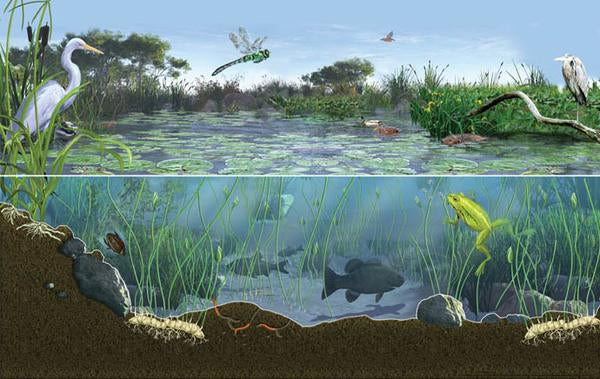
“An ecologist studies the relationship between living things and their habitats.”

So, in the example above, an ecologist would study the lifecycles and symbiotic relationships between living thing in this pond, like water quality, diversity of species, the food cycle, climate, pollutants…also, that ecologist would be able to explain what would happen if one element in the ecosystem went out of balance.

A Media Ecology

So, to continue with the analogy

Task:

Write down the ten most important elements that make up a Media ecology (think…key concepts).

Make a list in your notebooks and be prepared to add to it.

Elements in the Media Ecology.

Take responsibility for one element in the slideshow below and explain how it is an important and interdependent factor in the wider media ecology.

Extension Task

Think about this essay title:

‘Analyse the significance of a particular technological development in the media.’

Start thinking about this essay and how the introduction of the smartphone & the internet has had on the changing media ecology (in the slideshow above).

1 Media Ecology (Key Concepts) Week 1

Learn this. These key concepts are important for all your essays!

Learning:

To review, define and refine your understanding of the four key concepts in media.

Media Concepts:

Audience, Representation, Industry, Language

The Big Debate:

These are the four ideas at the heart of Media Studies as a subject, you should make explicit reference to them in ALL your essays!

Key vocabulary (for starters):

  • Audience: Active and Passive, Participatory and Fans
  • Representation: Ideology (values, attitudes and beliefs)
  • Industry: Conglomerates, DiY, Ownership, Power and Control
  • Language: Forms and Conventions

Media Theorists:

Blumler and Katz, Hall, Curran and Seaton, De Saussure

Exam Question:

“Explain how new media technologies have had an impact on the codes and conventions of media texts.”


First off…

A presentation… including a task.

Review your understanding of the four concepts against the breakdown in our blog:

  1. Representation
  2. Audience
  3. Industry
  4. Language

Independent study.

Memorise the definition of the following four key concepts, which we came up with in class. There will be a test!

Remember, these are essential for all your essays as the examiner is seeking to assess your explicit understanding.

Component 2 – Exam 1

  • Textual Analysis – Language and Representation
  • Music Industry – Audience and Industry

Component 4 – Exam 2

  • Postmodern Media – Representation, Audience, Industry and Language
  • Media Regulation – Representation, Audience, Industry and Language
  • Media Ecology – Representation, Audience, Industry and Language